Saluda County Dog Registration Information
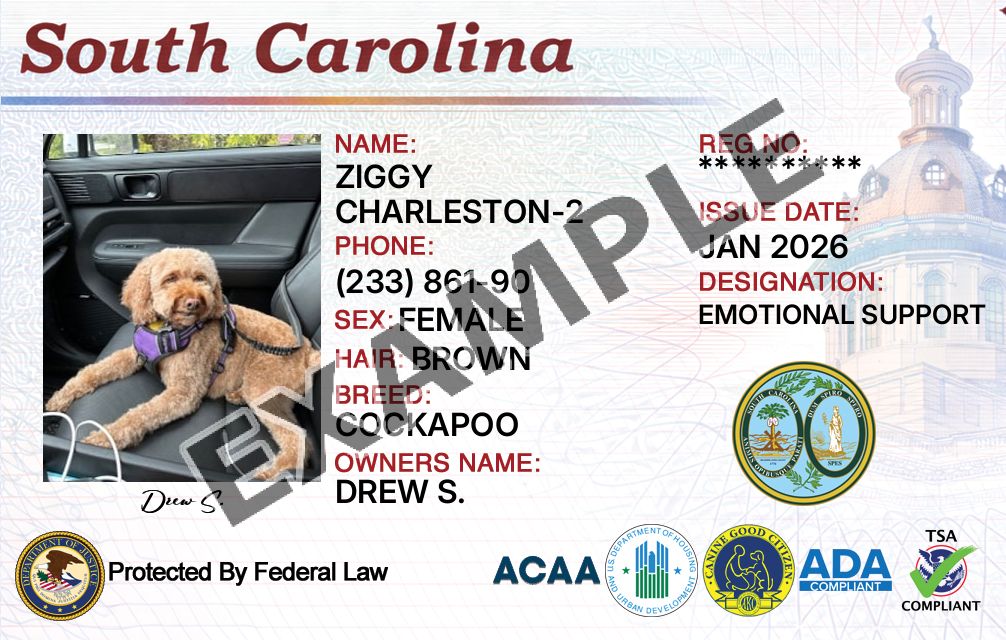
Service Dogs and Emotional Support Animals in Saluda, South Carolina
If you’re asking “where do I register my dog in Saluda County, South Carolina for my service dog or emotional support dog,” the key thing to know is that most residents are really looking for two separate processes: (1) local dog licensing / identification rules in Saluda County, and (2) the legal status of a service dog or emotional support animal (ESA). Dog licensing is handled locally, while service dog and ESA status comes from laws about disability accommodations and housing—not from a universal federal registry.
- Dog licensing / identification is typically handled by a local government office (often the county animal control function or sheriff’s office division that oversees animal control).
- Service dogs are not “registered” with a single federal office. Their legal protections come from disability law and proper training to perform tasks for a disability.
- Emotional support animals (ESAs) also are not registered through a universal government registry. ESAs are mainly a housing accommodation concept (not public-access service animals).
Where to Register or License Your Dog in Saluda County, South Carolina
The county’s animal control function is associated with the Saluda County Sheriff’s Office, and county offices can direct you to the correct process for the dog license in Saluda County, South Carolina and local animal control requirements. If you live inside a town or municipal boundary, you may also have local rules; if municipal requirements differ, the offices below can help confirm what applies to your address.
Saluda County Sheriff’s Office (Animal Control / County Enforcement)
Saluda County Council Office (County Administration / General County Assistance)
Overview of Dog Licensing in Saluda County, South Carolina
How licensing and identification commonly work
In South Carolina, dogs are generally expected to have current rabies vaccination, and local governments may require a dog license or at least clear identification (often the rabies tag and/or other identification such as a name plate or microchip). In Saluda County, county rules address dog identification for owners living in unincorporated areas and, where not in conflict with municipal law, may apply more broadly across the county.
County vs. town rules inside Saluda County
Some requirements can vary based on whether you live in:
- Unincorporated Saluda County (outside town limits): county ordinances and enforcement typically apply.
- Within a municipality (for example, within the Town of Saluda limits): a town may have its own ordinances that can add to or differ from county rules.
If you are unsure which rules apply to your address, use the office section above to confirm the correct licensing/registration point of contact for your location.
What You Need Before Registering a Dog
Typical documents and information
When asking about dog licensing requirements in Saluda County, South Carolina, most offices will request some combination of the items below. Requirements and accepted documents can vary, so bring what you have and ask what is required for your specific situation.
- Proof of current rabies vaccination (rabies certificate from a veterinarian is commonly accepted)
- Rabies tag information (many dogs receive a tag at vaccination)
- Owner identification (driver’s license or other ID)
- Proof of residency (especially if a program, fee, or rule is limited to county residents)
- Spay/neuter documentation (if relevant to fees or programs)
- Payment method for any applicable licensing fees
Service dogs and ESAs: what paperwork is (and isn’t) required
Service dog and emotional support animal status generally does not require a government-issued “registration.” However, you should be prepared for legitimate documentation needs in specific contexts:
- Service dog: no universal certificate is required for public access. The dog must be trained to perform tasks related to a disability.
- Emotional support animal (ESA): for housing accommodations, documentation commonly involves a letter from a qualified healthcare professional when requested by a housing provider, consistent with applicable housing laws.
Steps to Register or License a Dog in Saluda County, South Carolina
Step-by-step process (practical checklist)
- Confirm jurisdiction: determine if your home is in unincorporated Saluda County or inside a town/municipality.
- Gather rabies vaccination proof: ensure your dog’s rabies vaccine is current and you have the certificate/tag information.
- Contact the correct office: call the Saluda County Sheriff’s Office during administrative hours and ask for the right contact for animal control dog license Saluda County, South Carolina questions.
- Ask what “registration” means locally: in some places, “registering your dog” may mean confirming identification and rabies compliance rather than purchasing a separate license tag.
- Submit paperwork and pay any fee: if a licensing fee applies, ask what forms of payment are accepted and whether renewal is annual.
- Keep records accessible: keep a copy of your rabies certificate and any county/town documentation with your important household papers.
If your dog is a service dog or ESA
Even if your dog is a service dog or emotional support dog, local rules about rabies vaccination and identification can still apply. Service dog status does not automatically replace local dog license expectations. When in doubt, ask the county office whether any fee waivers or special handling exist locally (and what proof they require), and keep the conversation focused on local licensing versus service/ESA legal status.
Service Dog Laws in Saluda County, South Carolina
What makes a dog a service dog
A service dog is generally a dog that is individually trained to do work or perform tasks for a person with a disability. The legal protections that matter most day-to-day are about access and accommodations, not a county “service dog registration.”
No universal federal registry
There is not one universal federal government registry where you “register” a service dog for the United States. In practice, most situations rely on whether the dog is trained to perform disability-related tasks and behaves appropriately in public. Local government dog licensing (if applicable) is separate and may still require proof of rabies vaccination and identification.
How this interacts with dog licensing in Saluda County
- Local licensing/identification: may apply to all dogs, including service dogs.
- Public access: is based on disability law standards for service animals, not a county license label.
- Best practice: keep rabies vaccination proof current and readily available, because it’s commonly requested in many local processes.
Emotional Support Animal Rules in Saluda County, South Carolina
What an emotional support animal (ESA) is
An emotional support animal is generally an animal that provides comfort or emotional benefit to a person. Unlike a service dog, an ESA is not defined by task-based training for disability-related work in public settings.
Where ESAs matter most: housing
ESA status is most often relevant for housing accommodations. A housing provider may request documentation consistent with applicable housing laws and policies. That documentation is different from local dog licensing and does not replace county or town rules about rabies vaccination and identification.
ESAs and “registration” in Saluda County
If you are searching where to register a dog in Saluda County, South Carolina because your dog is an emotional support dog, focus on two separate tracks:
- Local compliance: rabies vaccination and any dog license in Saluda County, South Carolina (if required for your jurisdiction).
- Housing documentation: if you are requesting a housing accommodation, ask your housing provider what documentation they require and keep your healthcare documentation current.
Quick Comparison: Dog License vs. Service Dog vs. Emotional Support Animal
| Category | Dog License (Local) | Service Dog | Emotional Support Animal (ESA) |
|---|---|---|---|
| What it is | A local government licensing/identification requirement (varies by jurisdiction). | A dog trained to perform disability-related tasks for a person with a disability. | An animal that provides emotional support; not task-trained for public-access work. |
| Where you “register” | Typically through a county or municipal office that handles animal control/ordinances. | No universal federal registry; status is based on training and legal definitions. | No universal government registry; documentation is usually for housing accommodation requests. |
| Common documentation | Rabies certificate/tag info; proof of residency/ID; fee payment (if applicable). | No universal certificate required; may still need local rabies vaccination proof for licensing rules. | Housing providers may request a letter from a qualified healthcare professional, consistent with applicable rules. |
| Public access | Not applicable (this is local licensing, not access rights). | Generally permitted where the public is allowed, subject to behavior and control standards. | Not the same as service dog public access; typically not entitled to broad public access as a service animal. |
| Does it replace local licensing? | N/A | No. Local dog licensing/ID and rabies rules may still apply. | No. Local dog licensing/ID and rabies rules may still apply. |
Frequently Asked Questions
Do I need a dog license in Saluda County, South Carolina?
It depends on your exact location (unincorporated county vs. within a municipality) and the current local rules. Many communities require at least current rabies vaccination and identification, and some require a separate local license. The safest way to confirm the dog licensing requirements Saluda County, South Carolina residents must follow is to contact the official offices listed in the “Where to Register or License Your Dog” section.
Is my service dog required to be registered with the county?
Service dogs are not registered through a universal federal registry. However, if Saluda County or your municipality requires dog licensing/identification for dogs generally, those local rules can still apply. Ask the county contact whether any local fee waiver or notation exists for service animals and what documentation (if any) they accept for that purpose.
Is my emotional support dog “registered” anywhere official?
There is no universal government ESA registry. ESA documentation is usually relevant for housing accommodations, and it is separate from local dog licensing and rabies compliance. If your main goal is local compliance, focus on the county or town dog license/identification process.
What proof is usually needed to license or register a dog locally?
Most local processes start with proof of current rabies vaccination. You may also be asked for identification, proof of residency, and payment if a licensing fee applies.
If I live in the Town of Saluda, do I follow town rules or county rules?
You may need to follow town rules that apply within municipal limits, and county rules may apply in unincorporated areas or where there is no conflict. If you are unsure, call the Sheriff’s Office (listed above) and ask who handles “where do I register my dog in Saluda County, South Carolina” for your specific address.
Register A Dog In Other South Carolina Counties
Select your county below to get started with your dog’s ID card. Requirements and license designs may vary by county, so choose your location to see the correct options and complete your pup’s registration.
- Abbeville County Dog Registration
- Aiken County Dog Registration
- Allendale County Dog Registration
- Anderson County Dog Registration
- Bamberg County Dog Registration
- Barnwell County Dog Registration
- Beaufort County Dog Registration
- Berkeley County Dog Registration
- Calhoun County Dog Registration
- Charleston County Dog Registration
- Cherokee County Dog Registration
- Chester County Dog Registration
- Chesterfield County Dog Registration
- Clarendon County Dog Registration
- Colleton County Dog Registration
- Darlington County Dog Registration
- Dillon County Dog Registration
- Dorchester County Dog Registration
- Edgefield County Dog Registration
- Fairfield County Dog Registration
- Florence County Dog Registration
- Georgetown County Dog Registration
- Greenville County Dog Registration
- Greenwood County Dog Registration
- Hampton County Dog Registration
- Horry County Dog Registration
- Jasper County Dog Registration
- Kershaw County Dog Registration
- Lancaster County Dog Registration
- Laurens County Dog Registration
- Lee County Dog Registration
- Lexington County Dog Registration
- Marion County Dog Registration
- Marlboro County Dog Registration
- McCormick County Dog Registration
- Newberry County Dog Registration
- Oconee County Dog Registration
- Orangeburg County Dog Registration
- Pickens County Dog Registration
- Richland County Dog Registration
- Spartanburg County Dog Registration
- Sumter County Dog Registration
- Union County Dog Registration
- Williamsburg County Dog Registration
- York County Dog Registration